
PatentNext Takeaway: The Federal Circuit’s decision in Linden v. ResMed, Inc., No. 2026-1517 (Fed. Cir. Oct. 16, 2026) follows previous guidance that simply using known technology to conduct regular human activities is not patent eligible. Using computers or cell phones to remotely conduct doctor’s appointments without any technical improvement to the electronic devices is…

PatentNext Takeaway: Ceiva Opco, LLC v. Amazon.com, Inc. illustrates how a concrete technological improvement can support patent eligibility. The Federal Circuit found that a digital picture frame system with a physically separable user interface provided such an improvement by enabling remote access that overcame the limitations of earlier frames. The practical lesson is to explain…

PatentNext Takeaway: An improvement in the functioning of a computer, or an improvement to other technology or technical field, can provide an overlooked response to a software patent eligibility rejection. MPEP § 2106.04(d)(1) supplies two instructions: (1) the claim need not expressly announce the improvement, provided its limitations reflect the features producing it; and…

PatentNext Takeaway: The Federal Circuit’s decision in Dental Monitoring SAS v. Align Technology, Inc., No. 2024-2270 (Fed. Cir. July 7, 2026), provides another important warning for patent applicants seeking protection for artificial intelligence (AI) and machine-learning technologies. Applying a generic AI or “deep learning” system to a specialized medical or dental problem—even where the…

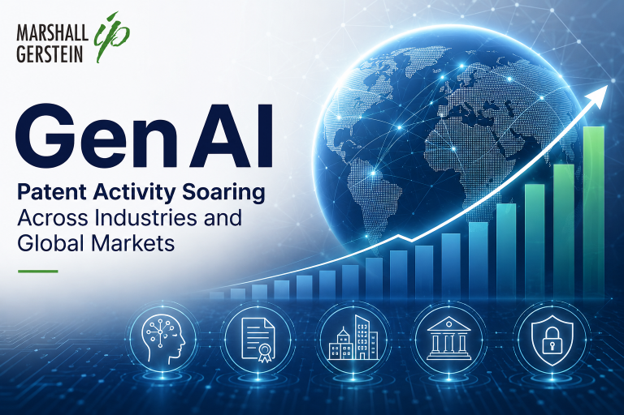
PatentNext Takeaway: Generative artificial intelligence patenting has entered a new phase. According to the World Intellectual Property Organization (WIPO), more GenAI patent families were published during 2024 and 2025 than during the entire preceding decade. GenAI patenting is also expanding beyond traditional technology companies into finance, telecommunications, infrastructure, and other industries. For businesses developing or…

PatentNext Takeaway: In Applications in Internet Time, LLC v. Salesforce, Inc., the Federal Circuit provided a useful reminder for drafting AI-related patent claims: dependent claims can help preserve broader independent-claim scope where the dependent claims separately recite narrower AI or agent-based implementations.

Although Applications in Internet Time was not a generative AI case, its…

PatentNext Takeaway: On April 30, 2026, the USPTO issued a memorandum titled “Best Practices for Submission of Rule 132 Subject Matter Eligibility Declarations (SMEDs),” updating the Office’s December 4, 2025 guidance to applicants and practitioners.  The new memorandum reinforces the Office’s SMED framework and characterizes it as a living body of guidance informed by practitioner experience.

The result is not a change in law or procedure, but a signal: the USPTO views SMEDs as an increasingly important evidentiary tool for resolving § 101 issues in emerging and fact‑intensive technologies, particularly artificial intelligence and diagnostics.

Continue Reading USPTO Updates SMED Best Practices

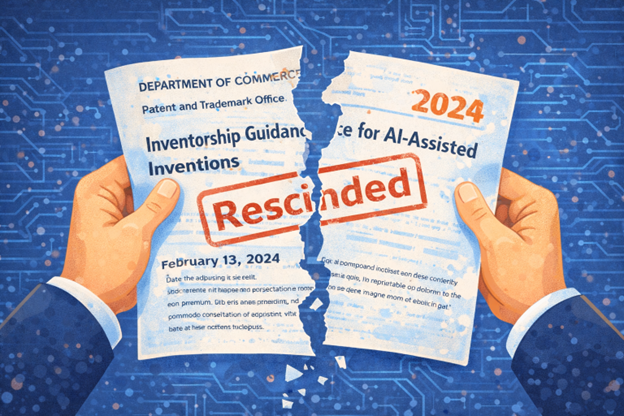
PatentNext Summary: The USPTO has rescinded its February 2024 inventorship guidance for AI-assisted inventions and replaced it with revised guidance issued on November 28, 2025, so prior materials relying on the earlier guidance should be treated as outdated. The revised guidance emphasizes traditional conception-based inventorship, makes clear that AI may assist but cannot be an inventor, and flags a practical priority risk where a foreign filing naming an AI system as the sole inventor can undermine U.S. priority claims. It also underscores that the guidance reflects USPTO examination policy—not binding law—so courts (or Congress) may ultimately provide the controlling rules.

Continue Reading The USPTO’s Revised Guidance regarding AI-Assisted Inventions

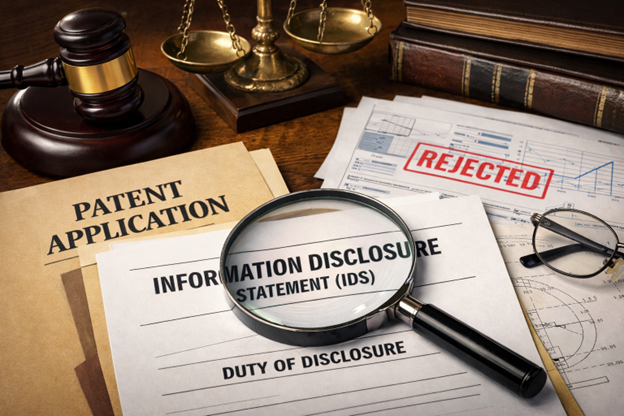
PatentNext Summary: An Information Disclosure Statement (IDS) is the primary procedural vehicle for satisfying the duty of candor and good faith owed to the USPTO during patent prosecution. The consequences of failing to disclose material information can be severe, including a later finding of inequitable conduct and resulting unenforceability of an issued patent. This article summarizes the legal framework governing materiality, the scope of the disclosure duty, foreign and parallel-application considerations, and practical IDS best practices for attorneys seeking to reduce risk while building a strong prosecution record.

Continue Reading The Pitfalls of Failure to Disclose Material Information to the USPTO and Information Disclosure Statement (IDS) Best Practices

Following the USPTO’s high-profile actions in Desjardins, the next question was how that guidance would play out in ordinary PTAB appeals. Ex parte Carmody provides an early answer.

The decision itself is short. The analysis is sparse. And that is precisely why it matters.

Continue Reading Ex parte Carmody: A Quiet but Important Signal on AI Eligibility Under §101